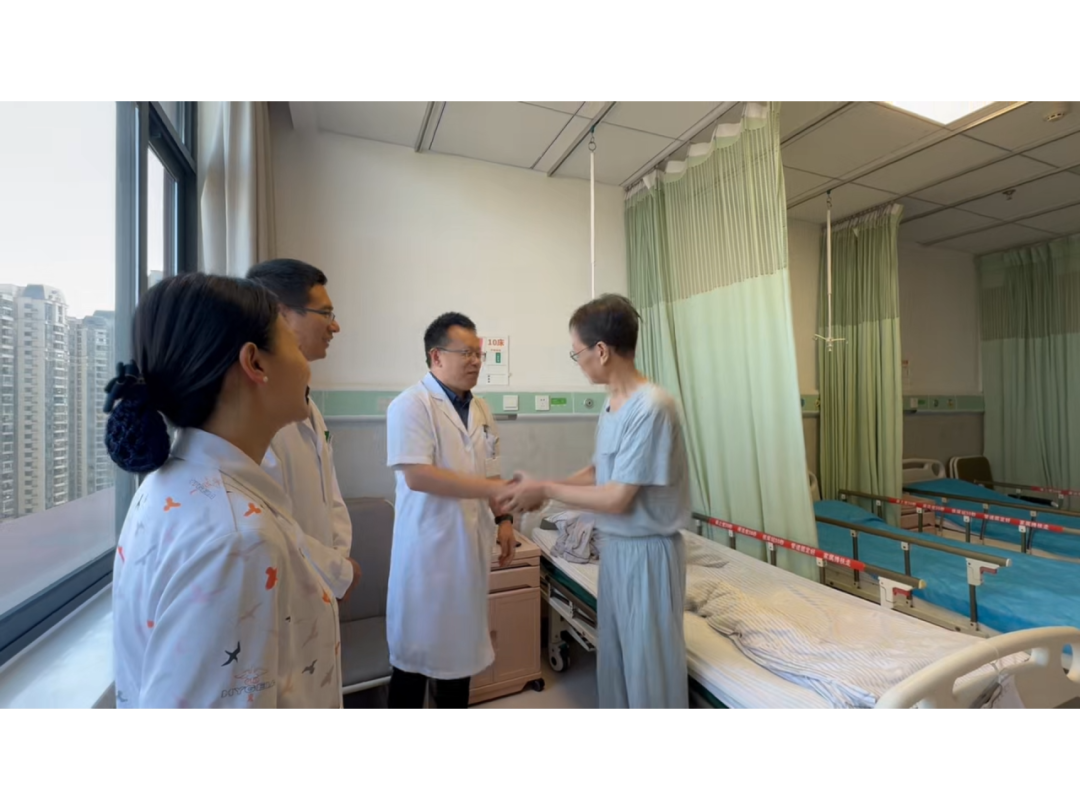
Dr. Zhang Jinshun and his team on ward rounds with Mr. Lin at Chongqing HYGEIA Hospital.
He is 69 now. Laparoscopy, ablation, interventional therapy, recurrence, metastasis, bone pain — words that would terrify most people pass through his conversation as calmly as if he were telling someone else's story. When he walked into Chongqing HYGEIA Hospital in 2021, he did not bring a stack of desperate medical records. He brought a simple idea, polished by time: "Even if it's cancer, I'm going to live my days well."
The first time Dr. Zhang met him, he could tell this patient was different. He did not press with "how much longer can I live," did not complain "why me." He simply sat down quietly, listened as his condition was explained clearly, heard the treatment plan through, and nodded.
Over these eleven years, he has turned fighting cancer into simply living his life — and turned cancer from a "death sentence" into a "chronic disease."
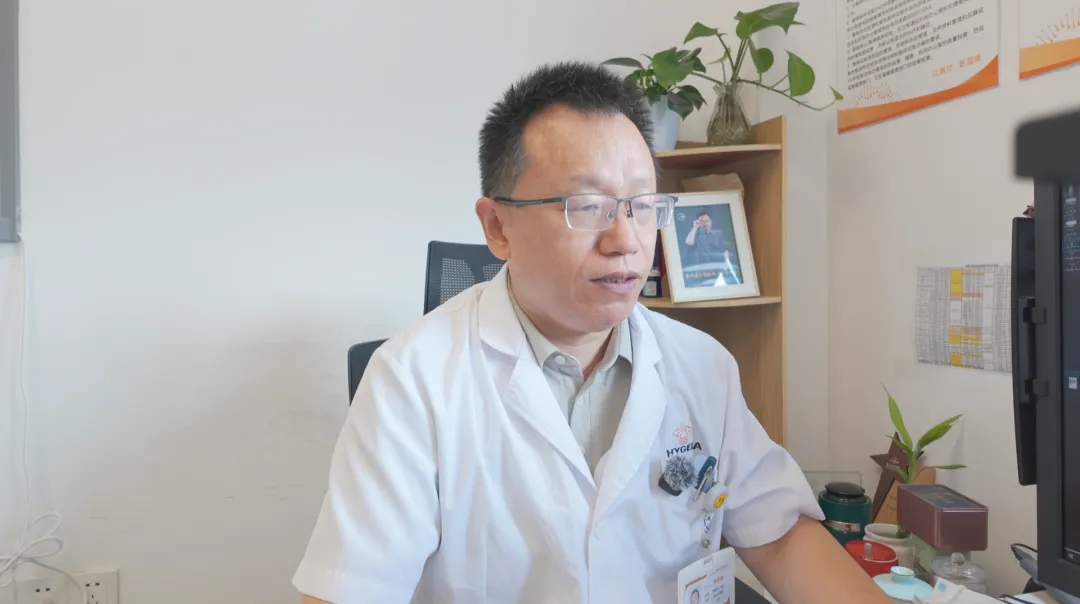
Dr. Zhang Jinshun, Director of Ward 1 of the Oncology Center at Chongqing HYGEIA Hospital.
2015: When It Was Found, He Comforted Himself First
On February 26, 2015, at age 59, he was found to have a liver tumor for the first time. "Even if the tests say cancer, then I have to live my days well," he told himself. He did not fall apart. Instead, he drew a simple line in his heart: live well today first.
He had thought through life and death with unusual clarity. "Everyone fears death. But I was almost 60. Compared with some of my peers who left early, I have already lived longer than they did. Relatively speaking, I've gotten the better deal."
This was not hollow optimism. It was the hard-won open-mindedness of a man who had battled liver disease for more than twenty years, hospitalized with fulminant hepatitis B as far back as 1993. He had learned one thing early: now that the illness has come, panic is useless. Cooperating well with your doctors is the only way out.
Eleven Years, One Long Road
In 2015 came laparoscopic surgery. Later the cancer spread within the liver, and he underwent ablation, then interventional therapy. In time, the interventional treatments stopped working well.
By 2021, when he first walked into HYGEIA Hospital, he had already been treated at Southwest Hospital for years, and his recurrent lesions were becoming harder and harder to treat. Transferring hospitals was not giving up — it was finding another road to keep walking.
At HYGEIA, Dr. Zhang re-evaluated his condition and combined local treatment with an updated systemic therapy plan. The disease was brought under control — but liver cancer is cunning, and it always resurfaces just when the waters seem calm. In September 2024, the liver lesion recurred again, this time with spread to the peritoneum. In January 2025, a metastasis appeared in his right scapula, and pain began to shadow him.
"It always felt sore here, around the shoulder," he said.
But every time the cancer came back, his doctors had another move. The peritoneal lesions were treated with systemic therapy; the scapular lesion was struck precisely with the Gyro Knife. "After the lesion was treated, the result was very good — the pain eased," he said, in the matter-of-fact tone of someone describing a chair that was fixed yesterday.
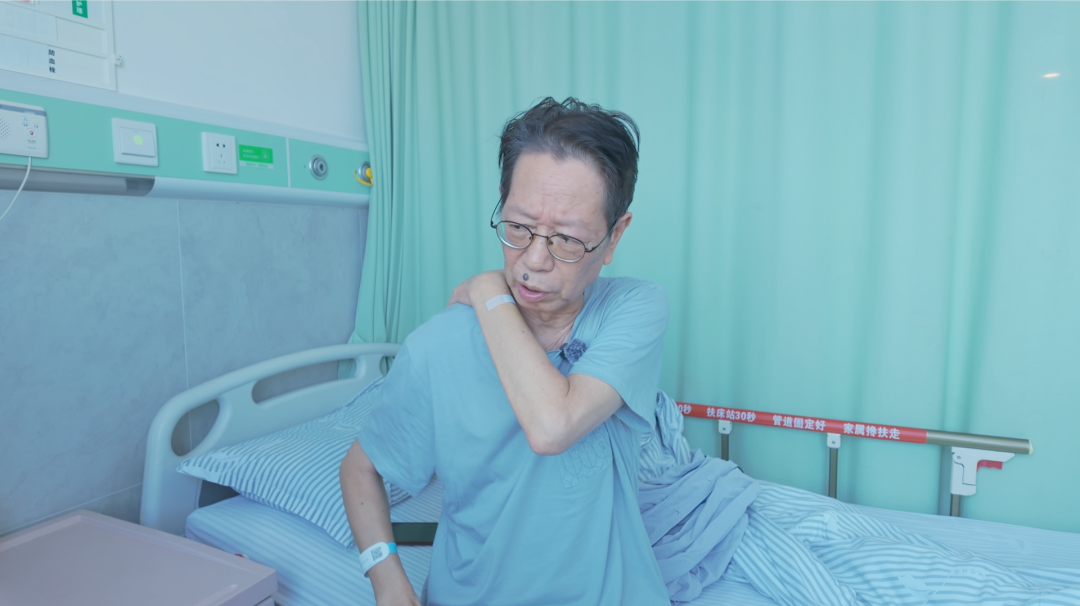
Mr. Lin during his interview in the ward — eleven years in, still calm and unhurried.
"If You Call It Miraculous, It Is" — The Precise Beam of the Gyro Knife
When he speaks about the Gyro Knife, he speaks from first-hand experience.
"The first time I came, the lesion was about 1.2 centimeters. After radiotherapy, within a few months it had shrunk to 0.7. Later it disappeared, little by little."
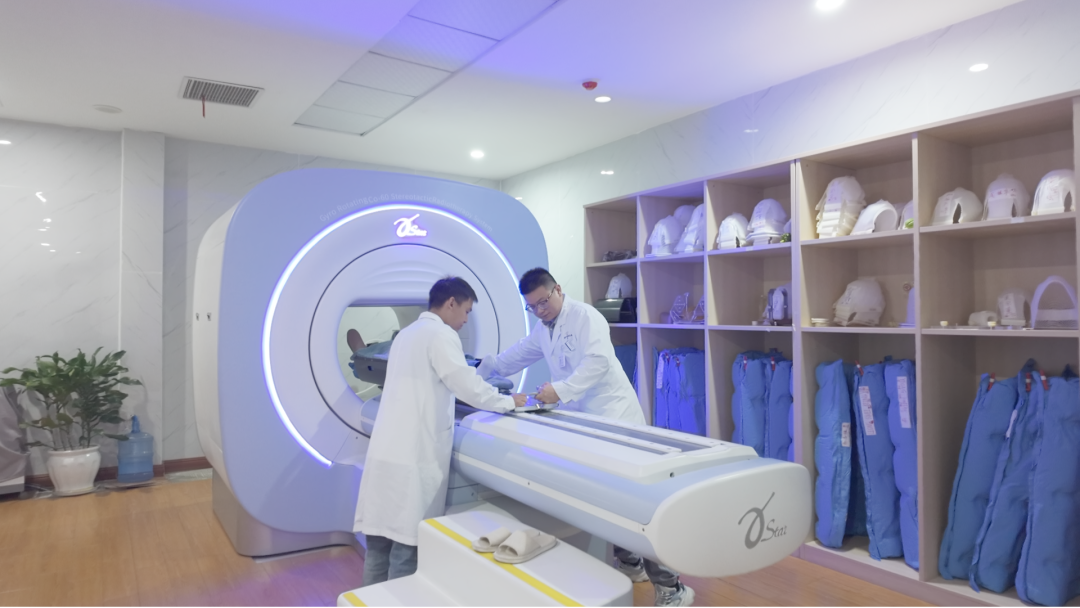
The Gyro Knife — HYGEIA's self-developed gyroscopic rotating cobalt-60 stereotactic radiotherapy system.
Dr. Zhang explained this "miracle" from the medical side: "The Gyro Knife is a precise radiotherapy technology. Its dosimetric advantage is very clear — the dose inside the tumor is very high, while the dose to the surrounding normal tissue is very low, with a steep gradient. That way we can treat the tumor while protecting normal tissue. Especially for patients with bone metastases and severe pain, local treatment can achieve a pain relief rate of more than 80%."
Translated into a patient's experience, those words amount to four: it does not torment you.
The Doctor's Goal: Live Well, Live Long
Assessing Mr. Lin's condition, Dr. Zhang is blunt: "Our purpose is just two things — first, let the patient live well; second, let him live long."
Of the eleven years of his cancer journey, six have been spent in treatment at HYGEIA. "Local radiotherapy combined with systemic therapy brings great benefit to liver cancer patients," Dr. Zhang said. "Quality of life improves, and survival is extended."
But for a patient of eleven years, the doctor's work goes far beyond prescribing and outlining target volumes. Behind every follow-up scan, every recurrence, every change of regimen lie rounds of weighing and judgment. "Our goal," Dr. Zhang said, "is to let cancer patients truly benefit, and to extend their survival."
Three Parts Treatment, Seven Parts Care — The Person Who Understands Him
The old saying "three parts treatment, seven parts care" has taken real flesh in his life.
"Care mostly happens at home, and it depends on your family's thoughtfulness," he said. "Having a family member who understands you and loves you — I think that matters a lot."
He rarely dramatizes his suffering, but when he mentions his family, his voice noticeably softens. The days outside the hospital — the cooked meals, the conversations at his side, the reminders to take his medicine, the gentle rubbing of his shoulder when it ached — this ordinary, daily groundwork is the true foundation that has carried him through eleven years.
He, in turn, offers this advice to fellow patients: "For those who break down completely, or whose condition suddenly worsens — you need the doctors' careful treatment and the nursing team's attentive care. But what matters even more is your family's company."
"I can't wipe it out completely. So I just see it as a chronic disease — one that will accompany me for the rest of my life."
The Rarest Kind of Heroism
We are used to imagining an "anti-cancer hero" as a fighter — someone swinging a sword to cut cancer out, root and branch, with the story ending in "complete cure" and triumph. But this 69-year-old man never treated cancer as an enemy that had to be annihilated. He accepts that it exists — and goes on living his own days. There is no despair of surrender in his words, and no fever of a bitter struggle. There is only acceptance, and life. Perhaps that is the rarest heroism of all in the fight against cancer.
Expert Profile
Dr. Zhang Jinshun
Director of Ward 1, Oncology Center, Chongqing HYGEIA Hospital
Dr. Zhang Jinshun leads Ward 1 of the Oncology Center at Chongqing HYGEIA Hospital, specializing in the comprehensive treatment of liver cancer — from surgical and local regional therapies such as ablation and interventional treatment to Gyro Knife precision radiotherapy combined with systemic therapy. His philosophy is simple and unvarying: help patients live well, and help them live long.
Facing Liver Cancer — or a Recurrence That Won't Respond?
HYGEIA Healthcare's international patient team can connect you with experienced oncology centers for Gyro Knife radiotherapy, interventional therapy, ablation, and comprehensive liver cancer care across our nationwide hospital network.
Book a Consultation— Chongqing HYGEIA Hospital, Brand & Communications Department —
← Back to News