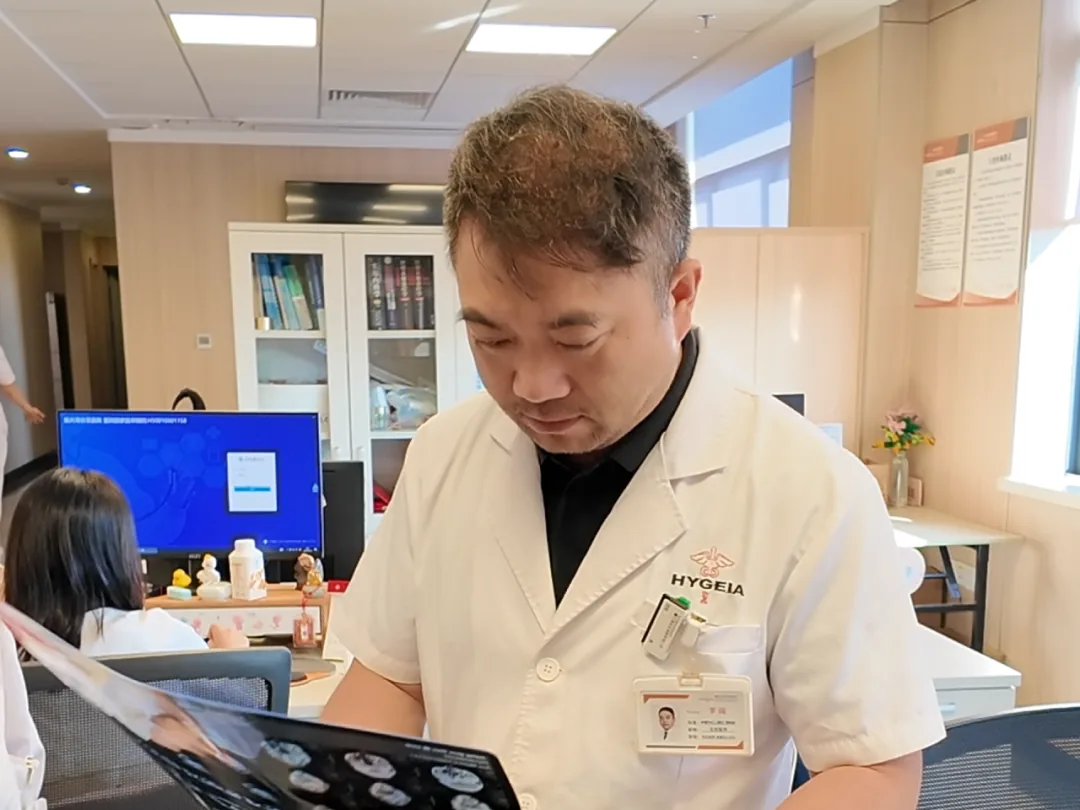
Ms. Qian, thirteen years after a stage IV primary pulmonary lymphoma diagnosis and a prognosis of four months.
In Chongqing HYGEIA Hospital's follow-up archive, one patient's file is marked in a special color. Not a warning, not a critical flag — just a very long timeline. In 2012, at a well-known hospital in Chongqing, she was diagnosed with lymphoma originating in the lung. The conclusion recorded at the time: stage IV, advanced, four months at most.
It is now 2026. She has been alive for thirteen years.
Setting Out Again: Visiting a Thirteen-Year Lymphoma Survivor
Outside the car window, Chongqing's summer heat pressed down in sticky waves. Director Luo Kuo sat in the back seat, his gaze somewhere in the distance. He has seen too many patients standing at the mouth of a tunnel — darkness ahead, the sound of family weeping behind them, and their own fear underneath. Some crouch down. Some turn and run. Some close their eyes and wait.
This patient walked in that tunnel for thirteen years. And she walked out.
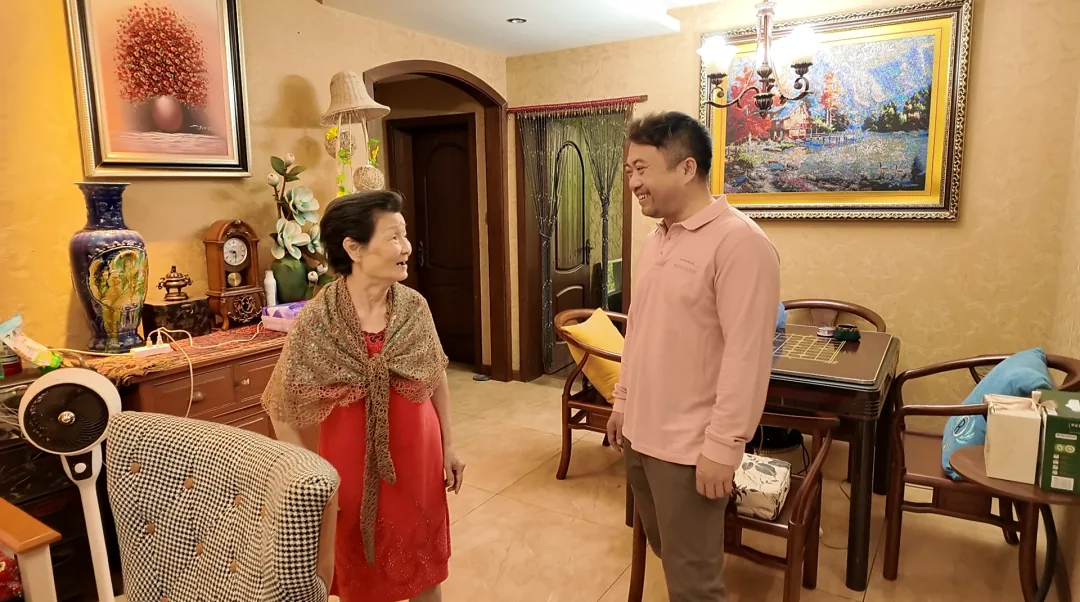
Director Luo Kuo on a home visit — thirteen years after the case that nearly ended in four months.
The Case: Primary Pulmonary Lymphoma and Respiratory Failure
"I remember her condition was extremely serious. It was lymphoma originating in the lung, with respiratory failure and very low oxygen saturation," Director Luo recalled.
At the time, she was fading. Her oxygen saturation hovered around 80% — normal is above 95%. A saturation of 80% means every organ in the body is struggling at the edge of oxygen deprivation.
"We gave her some low-intensity treatment. There were one or two relapses along the way. She followed me to HYGEIA Hospital, and treatment stabilized her again. She has now survived thirteen years."
Back then, her life had entered a tunnel of darkness. But with continued treatment, she soon walked out of that shadow and returned to a normal life.
Treatment: When the Family Wanted to Give Up, an Individualized Dose Reduction Brought Her Back
"Her family wanted to give up several times, but I was clear that lymphoma offers a real chance of cure. The first time, I persuaded them repeatedly before they agreed to chemotherapy. We used single-agent chemotherapy and pulled her back from the edge of life and death."
Director Luo paused here. He remembers it clearly — the family standing in the doorway of his office, their eyes red.
"I still remember it vividly. She should have received the standard four-drug CHOP regimen for lymphoma, but her body could not tolerate full-dose combination therapy. In the end we selected only two drugs: a corticosteroid first — because she could not take it orally, we switched to intravenous infusion — and then a low-dose combination with cyclophosphamide."
That individualized dose-reduced regimen stabilized a critical condition quickly.
"Given her condition at the time, the standard regimen was not treatment for her — it was a lethal burden."
Director Luo made a decision: do not follow the standard. Reduce the dose. Reduce the drugs. Start with steroids — oral if possible, intravenous if not — then carefully add a single agent, cyclophosphamide, also at a reduced dose. At that moment, it was the only path that might keep her alive.
"She herself was very strong. Honestly, for a younger person, respiratory failure might be unsurvivable within two or three days. Her hypoxemia — oxygen saturation persistently around 80% — lasted half a month, and she recovered. It really was a miracle."
As he said this, Director Luo did not claim the credit. But it was clear to everyone listening: without his decision to depart from the standard, she would never have had the chance to be strong.
"Sometimes in treating illness, besides the doctor's efforts, the patient's own strength matters enormously."
Her First Consultation: "At Most Four Months"
"The doctors at the other hospital told me: four months at most," Ms. Qian said.
"Lymphoma treatment relies mainly on chemotherapy plus targeted drugs. At that time they gave you only one chemotherapy agent — the standard regimen has four drugs, and only two were used — and it brought you back. You survived it because you were strong," Director Luo replied.
Ms. Qian waved her hand. "Doctor Luo, you saved my life."
"I got this illness when I was 70. Thirteen years have passed, and he is my lifesaver," she said.
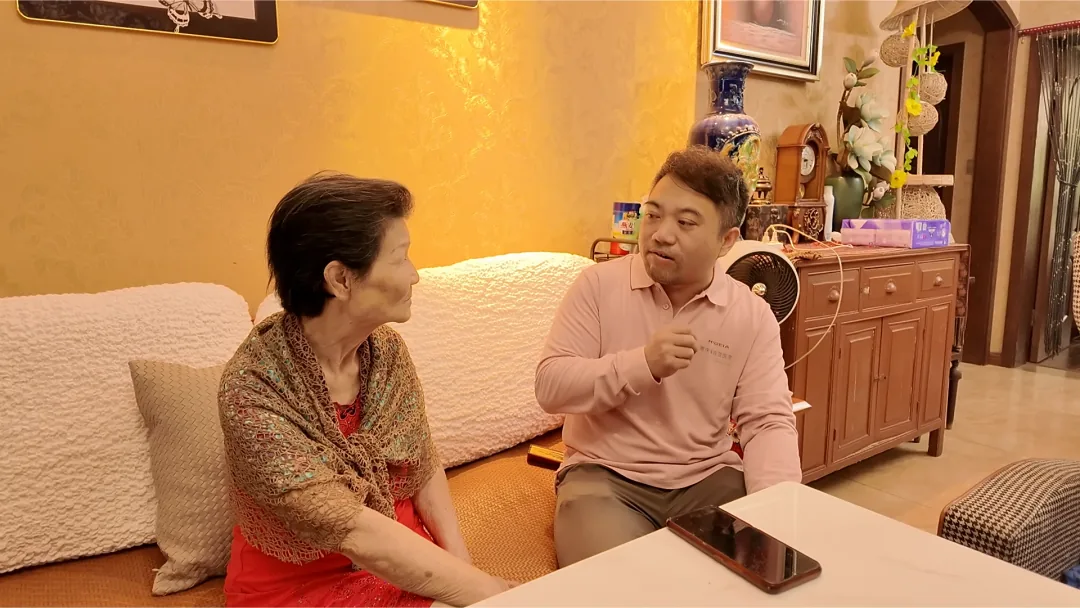
Neither was willing to take the credit. "Doctor Luo, you saved my life." "You survived it because you were strong."
The two of them went back and forth, neither willing to take the credit. In the end, Director Luo laughed, and so did she.
But as she laughed, her eyes reddened. "When I was first diagnosed with lymphoma, it was stage IV, advanced — which meant four months left to live. When I heard that, the tears came immediately."
Stage IV. Advanced. Four months. Those three phrases landed on her when she was 70 — an age that should have been about freedom and ease. Instead, she was told her time had nearly run out.
"My Fellow Patients' Optimism Took Away My Fear"
"Later I was admitted to the hospital. Under the doctors' care, I found that everyone in my room and on my floor was a cancer patient. Some had been ill for a long time, some had just been diagnosed — but they all seemed relatively optimistic, without a heavy burden on their minds."
"And I thought to myself: it can't be that terrifying after all."
A 70-year-old woman, told she had four months, walked into a ward and found not despair but a group of people chatting, laughing, and encouraging one another. In that moment, the stone in her heart loosened.
Sometimes what heals a person is not the medicine, but the person beside them saying: "I'm the same. And I'm still here."
The Most Moving Thing: "Doctor Luo Was Like Family"
"What moved me most was Doctor Luo's attitude and care toward his patients. During my hospitalization, if he was not on night duty, he would still come to the ward. He would check on how we were living, sit and chat with us like family. He would talk us through things, tell us not to be afraid — that as long as we kept up treatment, the disease could be beaten," Ms. Qian said.
"In that situation, I developed a special affection for Doctor Luo. I felt this doctor was truly responsible — he did not just see you and prescribe medicine. He used his own rest time to care for patients and to understand their condition."
"Some problems only come up when you are asked about them across a desk. But there are also very small things in daily life that deserve attention. He understands a lot of traditional Chinese medicine as well, so I respect him deeply," she said.
The Doctor's View: Walking Out of the Shadow
Director Luo's closing advice: even a malignant tumor is not something to despair over. With standardized or individualized treatment, the disease can be effectively controlled. Compared with other solid tumors, lymphoma is considerably easier to treat.
"Malignant tumors are not to be feared. The key is to hold firm to your confidence, persist with treatment, keep up regular follow-up, and address problems early. You will walk out of the shadow in the end."
He glanced at Ms. Qian sitting beside him and said: "Look — we have come through this tunnel. Life is an open road again."
Not Every Patient Can Take the Standard Regimen
Standard treatment guidelines describe the best option for the average patient — not necessarily the best option for this particular patient. When a body cannot tolerate full-dose combination chemotherapy, an individualized plan built around the patient's actual condition can still open a way forward. Ms. Qian's thirteen years are the evidence.
Expert Profile
Director Luo Kuo
Director, Oncology Center, Chongqing HYGEIA Hospital (HYGEIA Healthcare)
Director Luo Kuo leads the Oncology Center at Chongqing HYGEIA Hospital. He has extensive experience in the diagnosis and individualized treatment of lymphoma, lung cancer, and other solid tumors, with a particular focus on adjusting standard regimens for elderly, frail, and critically ill patients who cannot tolerate full-dose combination therapy.
Told There Is "No Standard Option" Left?
HYGEIA Healthcare's international patient team can connect you with oncology specialists across our hospital network, arrange remote review of your records, and help coordinate visa, travel, and interpretation.
Book a Consultation— Chongqing HYGEIA Hospital, HYGEIA Healthcare —
← Back to News