
The general surgery team during the emergency splenectomy at Chang'an Hospital, Xi'an.
The accident came without warning. A violent impact to the chest and abdomen in a car crash sent Mr. Li to the emergency department, where imaging showed fractures of his left ribs. But the scans also uncovered something Mr. Li himself had never suspected: he had liver cirrhosis with an enlarged spleen — a condition that had been silently progressing inside him for years.
Three days later, his abdominal pain suddenly worsened. The new diagnosis was chilling: traumatic splenic rupture. In a patient with cirrhosis, the spleen's blood vessels are tortuous, dilated, and abnormally rich in blood supply — once ruptured, the bleeding is typically swift and severe. Meanwhile, his limited liver reserve meant the risk of life-threatening postoperative complications — ascites, portal vein thrombosis, hepatic encephalopathy — was far higher than in an ordinary patient. An already dangerous emergency operation had just become many times harder.
Step One: "Cut Off the Supply" — Splenic Artery Embolization
Time was life. Under the leadership of Prof. Liu Hongbin, Vice President of the hospital and Director of General Surgery, the vascular surgery, anesthesiology, and critical care teams convened an urgent multidisciplinary (MDT) consultation. Their conclusion: opening the abdomen immediately would likely provoke uncontrollable massive bleeding in a cirrhotic patient with splenomegaly.
Instead, the team devised a decisive two-step plan: first, the vascular surgery team would use minimally invasive interventional technique to embolize the splenic artery and rapidly control the hemorrhage; then the general surgery team would seamlessly take over and remove the ruptured spleen.
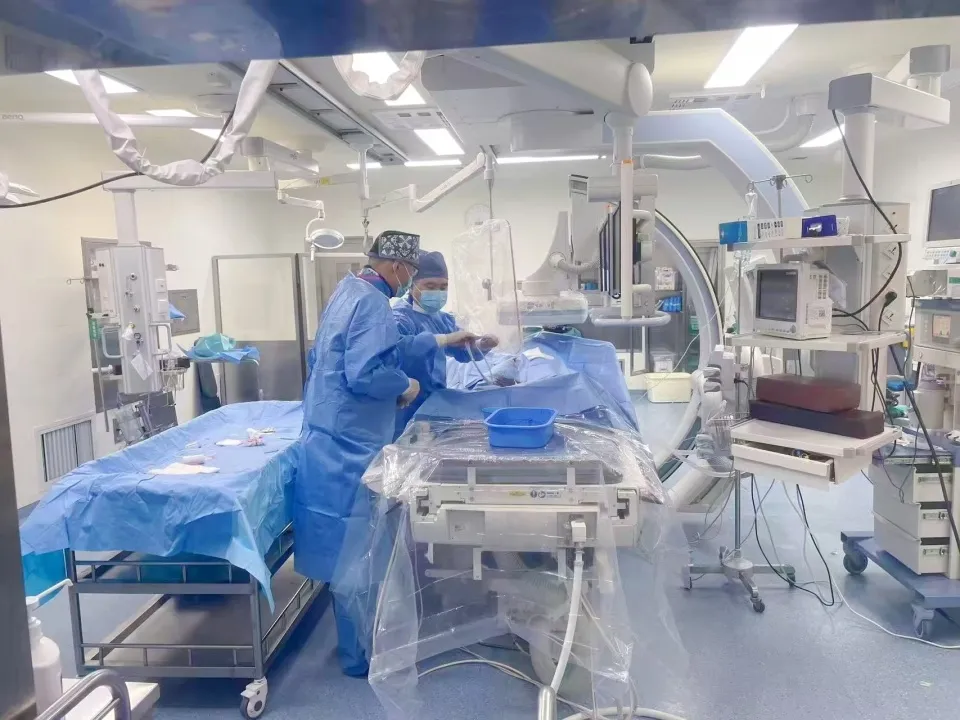
The interventional team performing emergency splenic artery embolization in the hybrid operating room.
Step Two: Remove the Bomb — Emergency Splenectomy
The operation took place in the hospital's hybrid operating room. Vascular surgeons precisely completed the splenic artery embolization, buying a critical window of safety; the general surgery team then swiftly removed the ruptured spleen, eliminating the source of bleeding entirely; the anesthesia team safeguarded vital signs from start to finish. In one seamless multidisciplinary relay, the rescue was brought to a successful close.
Why Cirrhosis Makes a Ruptured Spleen So Deadly
A healthy person can often tolerate emergency splenectomy. In a cirrhotic patient, every variable turns hostile: the spleen is engorged and hypervascular, so bleeding is torrential; the liver's impaired synthesis of clotting factors worsens hemostasis; and poor hepatic reserve multiplies the risk of ascites, portal vein thrombosis, and hepatic encephalopathy after surgery. This is precisely why the team chose to embolize first — collapsing the pressure inside the splenic circulation before a single incision was made.
The "combination punch" strategy — interventional embolization followed by definitive surgery — converted an operation with a high risk of intraoperative catastrophe into a controlled, staged rescue.
Expert Reminder: Beware "Delayed Splenic Rupture" After Chest or Abdominal Trauma
"Even if tests show nothing abnormal right after an injury, you must not let your guard down. Splenic damage can rupture days — sometimes much longer — after the trauma, and delayed bleeding is often even more dangerous. Follow your doctor's advice to stay for observation, and seek immediate care if abdominal pain worsens or you feel dizzy or palpitations."
Prof. Liu's warning applies to every case of blunt chest and abdominal trauma: a spleen can look intact on the first scan and still rupture later. Any patient discharged after such trauma should know the red flags — worsening left upper abdominal pain, dizziness, palpitations, pallor — and return to a hospital immediately.
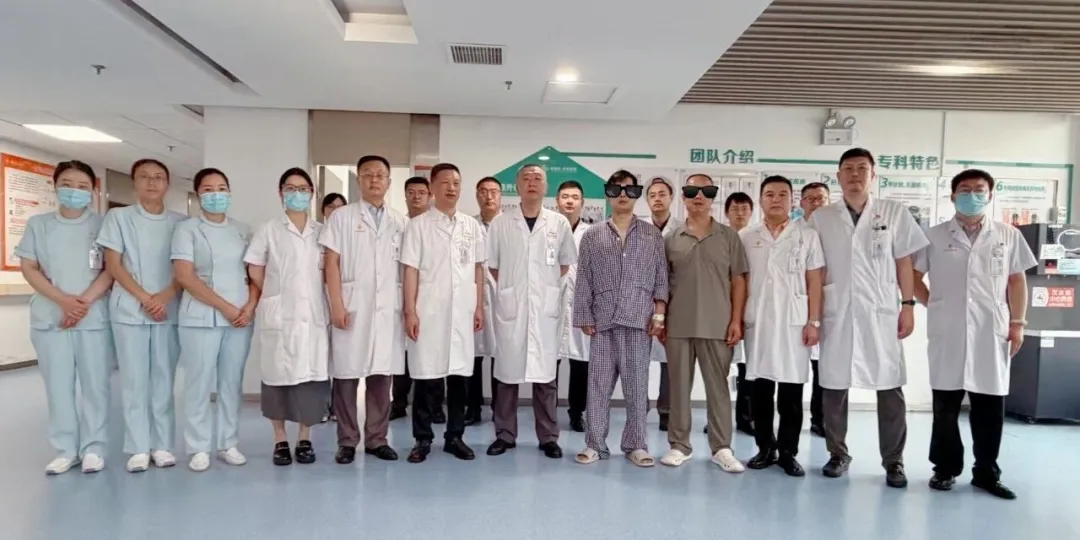
Mr. Li and his family with the multidisciplinary team after his recovery.
A Life Pulled Back From the Edge
From a routine crash workup, to the unexpected discovery of cirrhosis, to a ruptured spleen that could have claimed his life at any moment — Mr. Li's story shows the value of a true multidisciplinary system: trauma surgery, vascular intervention, anesthesiology, and intensive care acting as one team, with one plan. Today he has recovered and returned home. Behind his survival stands not a single heroic surgeon, but a hospital-wide "combination punch" — precise, staged, and relentless.
Expert Profile
Prof. Liu Hongbin
Vice President, Director of General Surgery, Chang'an Hospital (HYGEIA Healthcare)
Prof. Liu Hongbin leads general and emergency surgery at Chang'an Hospital in Xi'an, with extensive experience in complex abdominal trauma, hepatobiliary surgery, and perioperative care for high-risk patients with liver disease. He champions the hospital's multidisciplinary rescue model, in which interventional radiology, surgery, anesthesia, and critical care plan and execute life-saving treatment as a single coordinated team.
Need World-Class Emergency & Surgical Care in China?
HYGEIA Healthcare's international patient team can connect you with trauma centers, interventional radiology, and multidisciplinary surgical teams across our nationwide hospital network.
Book a Consultation— Chang'an Hospital (Xi'an), HYGEIA Healthcare —
← Back to News