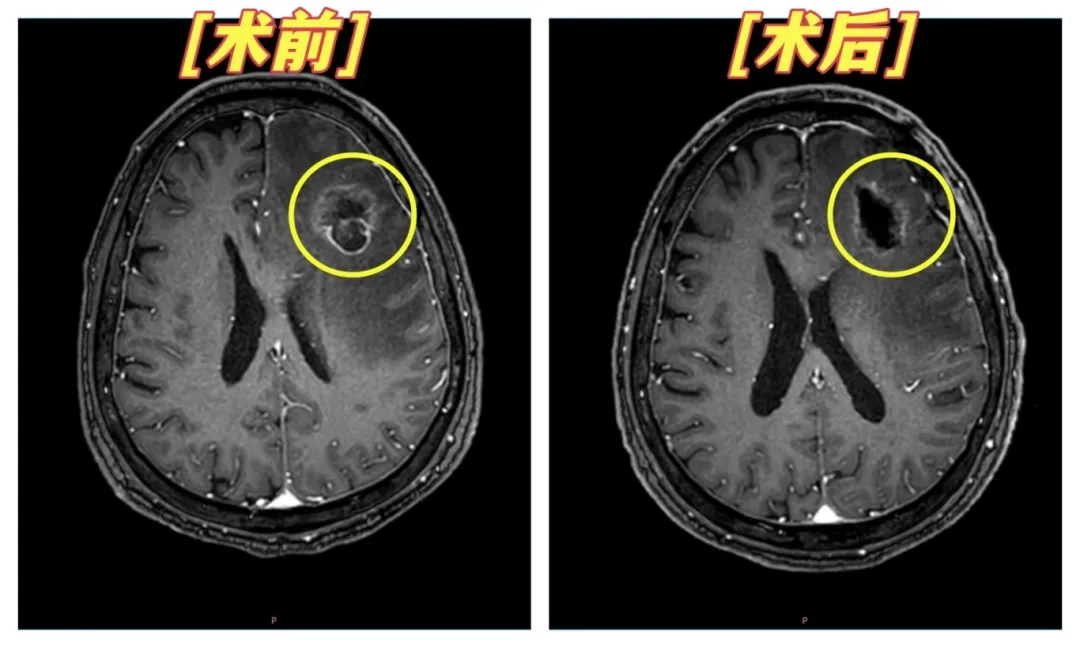
Enhanced MRI revealed the "ice and fire" paradox: the right frontal metastasis had shrunk after radiotherapy, while the left lesion was actively growing with severe cerebral edema — a rare signal of tumor heterogeneity.
A sudden epileptic seizure. Complete loss of consciousness. When Mr. Xie, already one year into his battle with lung cancer, woke up in the emergency room, his right arm and leg were barely responsive, and his speech was slurred and labored. He had just joined the roughly 20–65% of lung cancer patients who will eventually develop brain metastasis — one of the most feared complications in oncology.
For non-small cell lung cancer (NSCLC) patients like Mr. Xie, the risk is even higher. Brain metastases bring not just a poorer prognosis but a cascade of debilitating symptoms: seizures, limb weakness, cognitive decline, and a sharp drop in quality of life. By the autumn of 2025, despite his initial lung tumor responding to chemoradiotherapy, cancer cells had already quietly crossed the blood-brain barrier and colonized both frontal lobes.
The "Ice and Fire" Paradox: Same Treatment, Opposite Responses
In December 2025, Mr. Xie underwent a routine follow-up scan. The contrast-enhanced MRI revealed something his medical team had rarely seen: after identical radiotherapy targeting both brain lesions, the right frontal tumor had measurably shrunk — but the left frontal tumor was not only growing, it was generating aggressive cerebral edema that was compressing and displacing nearby brain tissue. That was the direct cause of his seizure and neurological deficits.
"This is a textbook signal of tumor pathological heterogeneity," explained Dr. Tong Jianguo, Director of Neurosurgery at Chongqing HYGEIA Hospital. "The same patient, the same treatment, but the two lesions behaved in completely opposite ways. It strongly suggested that the cell types or biological behaviors of the two metastases were fundamentally different — which is precisely why so many late-stage cancer patients experience 'same drug, different outcome.'"
With the left tumor actively compressing brain tissue and threatening irreversible neurological damage, time was not on Mr. Xie's side.
MDT in Action: Breaking Through Uncertainty
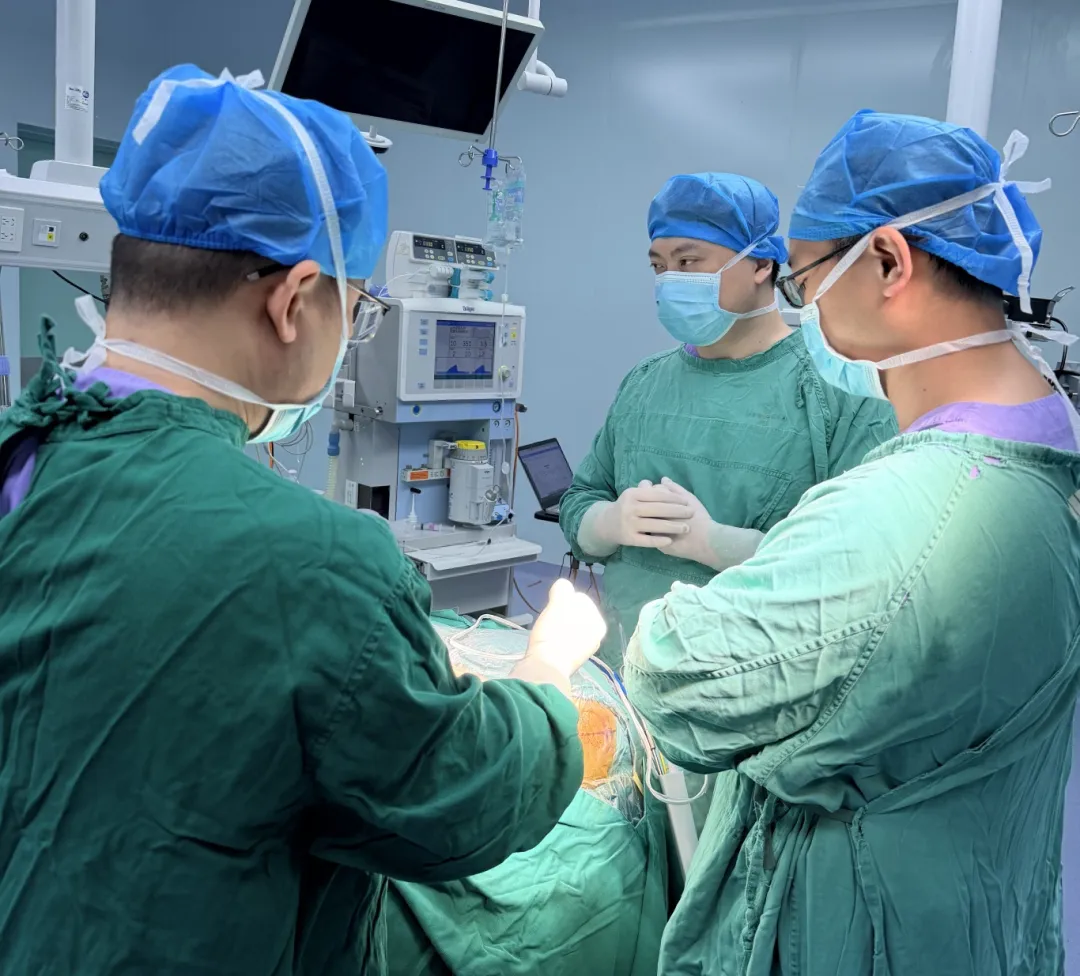
Chongqing HYGEIA Hospital's MDT approach: neurosurgeons, oncologists, and radiologists collaborate in real time to map each brain lesion's precise relationship with critical nerves and vessels before surgery.
Chongqing HYGEIA Hospital immediately activated its Multidisciplinary Team (MDT) protocol. Neurosurgeons, medical oncologists, and radiologists gathered to address the urgent question: what was actually driving the left tumor's growth, and what was the safest way to remove it?
In brain metastasis surgery, millimeter precision defines the boundary between meaningful recovery and permanent disability. The team deployed advanced multi-modal imaging to construct a three-dimensional map of the tumor's exact relationship with surrounding nerves and blood vessels. This allowed them to design a minimally invasive, ultra-precise resection plan that maximized tumor removal while protecting essential neurological function. Post-operative rehabilitation pathways were charted before the first incision was ever made.
Surgical Precision Meets Pathological Clarity
The surgery was successful — the left frontal tumor that had been impervious to radiotherapy was resected in its entirety. But the most critical insight came from the pathology report: the left brain metastasis was large cell neuroendocrine carcinoma, a fundamentally different tumor type from the right-side lesion. This discovery solved the "ice and fire" mystery in full — the left tumor's aggressive biological nature meant it was inherently resistant to conventional radiotherapy.
Even more revealing: Mr. Xie's original right-lung primary tumor, initially classified as non-small cell carcinoma, was now confirmed as a complex lesion tending toward squamous cell carcinoma with a large cell neuroendocrine component. This dual-pathology identity was the biological root of his disease complexity — and the pathology report now provided an unambiguous roadmap for his next phase of systemic treatment.
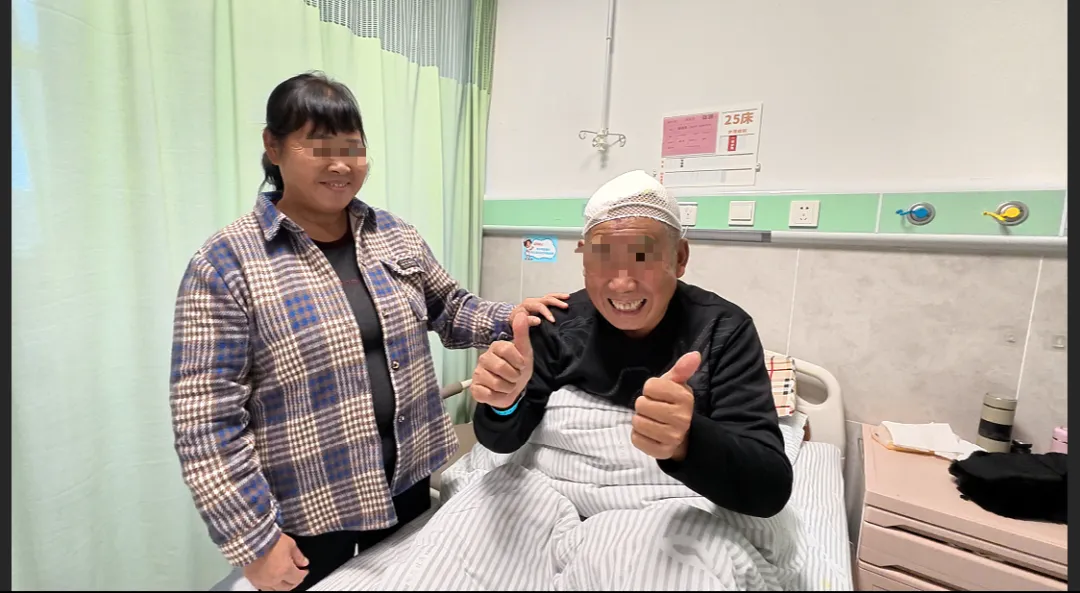
Following precision tumor resection, Mr. Xie steadily regained speech fluency, limb strength, and self-care ability — transforming from a bed-bound post-seizure patient to independent daily living.
From Seizure to Self-Sufficiency: Recovery in Weeks
Mr. Xie's post-operative recovery unfolded methodically. His speech, nearly unintelligible on admission, returned to clear, functional communication. Strength returned to his right limbs. Step by step, he regained the ability to care for himself independently.
"In advanced cancer treatment, precise diagnosis is the prerequisite for everything. Without clarifying the pathological characteristics of each lesion, you cannot select the most appropriate treatment strategy. The MDT approach ensures nothing is missed."
— Dr. Huang Shaokuan, Associate Chief Physician, Department of Neurosurgery, Chongqing HYGEIA Hospital
After a short rehabilitation period, Mr. Xie was discharged — returning to life with quality, dignity, and a precisely tailored treatment plan for the road ahead.
Precision Medicine: The New Standard for Brain Metastasis
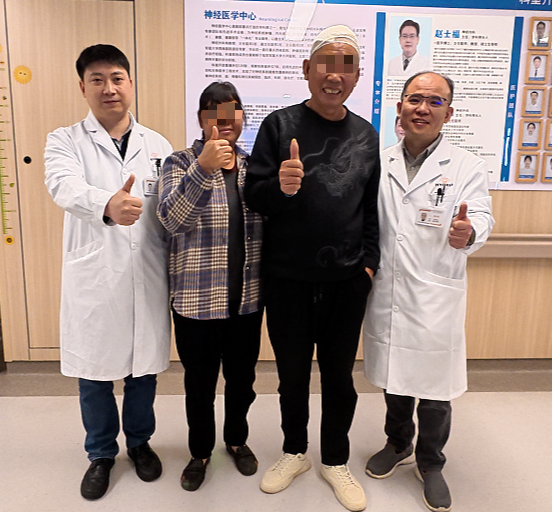
Director Tong Jianguo (center) and the neurosurgery team. From pre-op multi-modal imaging to intra-operative real-time neuronavigation to post-op systematic rehabilitation, precision medicine is rewriting the prognosis for brain metastasis patients.
"Brain surgery demands the highest level of precision — especially when resecting metastases in functional areas," says Dr. Huang. "The complete precision management chain — from multi-modal pre-op imaging, through intra-op real-time neuronavigation, to systematic post-op rehabilitation — is what transforms outcomes for these patients. We are not just extending survival; we are protecting the quality of every day lived."
Lung cancer brain metastasis is an advanced-stage diagnosis, but it is not the end of the treatment road. Chongqing HYGEIA Hospital's "advantaged specialty + integrated platform" model leverages MDT to break down the walls between departments, delivering a single-stop, full-journey treatment plan for late-stage cancer patients with complex multi-system involvement. No hospital-hopping. No fragmented care. Just a cohesive medical team working from the same diagnostic blueprint toward the same goal: meaningful, long-term survival with quality of life.
"Advantaged Specialty + Integrated Platform"
Mr. Xie's journey from a seizure-induced emergency to independent living captures the essence of modern oncology at HYGEIA Healthcare: precision diagnosis first, precision surgery when needed, and an integrated platform that keeps every specialist aligned. For international patients facing complex cancer diagnoses, this model means access to the right treatment decision — the first time, without delay.
Explore Precision Neurosurgery & MDT Cancer Care at HYGEIA
Whether you are facing a new cancer diagnosis, managing advanced disease with brain involvement, or seeking a second opinion on a complex oncology case, our multidisciplinary teams at Chongqing HYGEIA Hospital and across the HYGEIA network are ready to help.
Contact Us for a Consultation